
A Guide to Perfect LED Lighting: Eliminating the Guesswork in LED Installations
Confused in Identifying the Perfect Number of LED Lights in an Area?
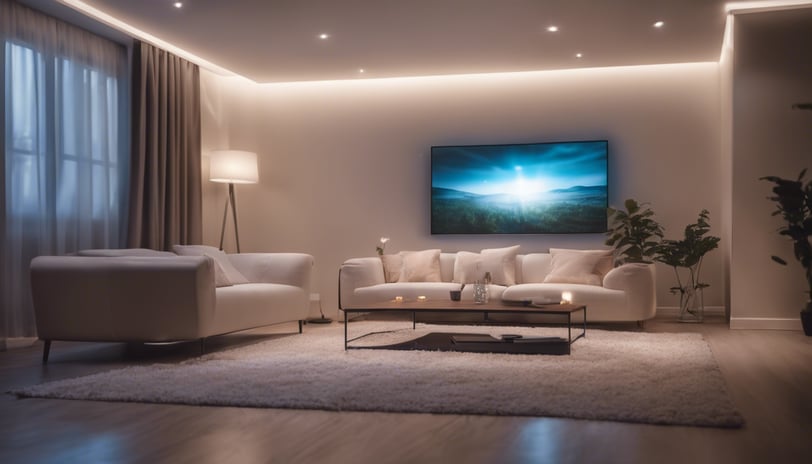
Confused in Identifying the Perfect Number of LED Lights in an Area?
When it comes to installing LED lights in your projects or home, it's crucial to ensure the right balance of brightness, efficiency, and cost savings. However, many people find themselves overwhelmed and unsure about how many LED lights they should install in a given area. This guide aims to eliminate the guesswork and provide you with a step-by-step approach to calculating the perfect number of LED lights for any space.
Highlighted Savings
By accurately determining the number of LED lights needed, you can enjoy several savings in your lighting projects:
Reduced labor costs for installation
Savings on wiring, switches, and other infrastructure
Avoidance of modification costs
Buying the right quantity of lights
Savings on electricity bills
Calculating the Perfect Number of Lights in a Given Area
To calculate the perfect number of LED lights for a specific area, it's essential to understand the concepts of lumen and lux. These measurements help determine the brightness and illumination required for optimal lighting.
What is Lumen?
Lumen is the unit of measurement for the total amount of visible light emitted by a light source. It represents the brightness of the light and determines how well a space is illuminated. The higher the lumen value, the brighter the light.
What is Lux?
Lux is the unit of measurement for illuminance, which represents the amount of light that falls on a given surface area. It indicates the level of brightness perceived by the human eye. Lux takes into account the distance between the light source and the surface, as well as the angle at which the light is emitted.
Example: Calculating the Perfect Number of LED Lights in a Room
Let's consider a standard-sized room measuring 4 meters by 5 meters. To determine the number of LED lights needed, follow these steps:
Calculate the total area of the room: 4m x 5m = 20 square meters.
Determine the desired lux level for the room. For general lighting in a residential space, a lux level of 300-500 lux is typically sufficient.
Multiply the desired lux level by the total area of the room to calculate the total number of lumens required. For example, if we choose 400 lux, the calculation would be: 400 lux x 20 square meters = 8,000 lumens.
Now, consider the lumen output of the LED lights you plan to use. Let's assume each LED light emits 1,000 lumens.
Divide the total number of lumens required (8,000 lumens) by the lumen output of each LED light (1,000 lumens) to get the total number of LED lights needed: 8,000 lumens / 1,000 lumens = 8 LED lights.
Based on this calculation, you would need to install 8 LED lights in the room to achieve the desired level of illumination.
Example: Calculating the Perfect Number of LED Lights in a Warehouse
Calculating the number of LED lights for a larger space like a warehouse follows a similar approach:
Measure the total area of the warehouse in square meters.
Determine the desired lux level based on the activities taking place in the warehouse. For detailed tasks, a higher lux level may be required.
Multiply the desired lux level by the total area of the warehouse to calculate the total number of lumens required.
Consider the lumen output of the LED lights you plan to use and divide the total number of lumens required by the lumen output of each LED light.
By following these steps, you can accurately determine the perfect number of LED lights needed for any given area, ensuring optimal brightness and cost savings.
Conclusion
Installing the perfect number of LED lights in any space is crucial for achieving the desired level of brightness, efficiency, and cost savings. By understanding the concepts of lumen and lux, and following a step-by-step calculation process, you can eliminate the guesswork and ensure the right quantity of LED lights for your projects or home. This not only saves you money on installation and infrastructure but also results in lower electricity bills and a more visually appealing environment.
Remember, proper lighting not only enhances the aesthetics of a space but also plays a significant role in productivity, safety, and overall well-being. So, take the time to calculate the perfect number of LED lights and enjoy the benefits of efficient and effective lighting.